|
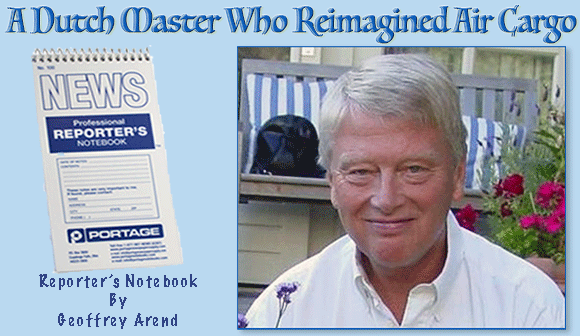
Let me tell you a story about Jacques Ancher who celebrated his 86th birthday on April 29 at home in the Netherlands.
There are certain names in aviation that don’t just belong to a company or an era—they kind of echo across generations.
And in air cargo, one of those names is Jacques Ancher.
Right now in 2026 what’s fascinating is that even years after he stepped away from the business, people still talk about him like he just left the room yesterday. That kind of impact doesn’t fade easily.
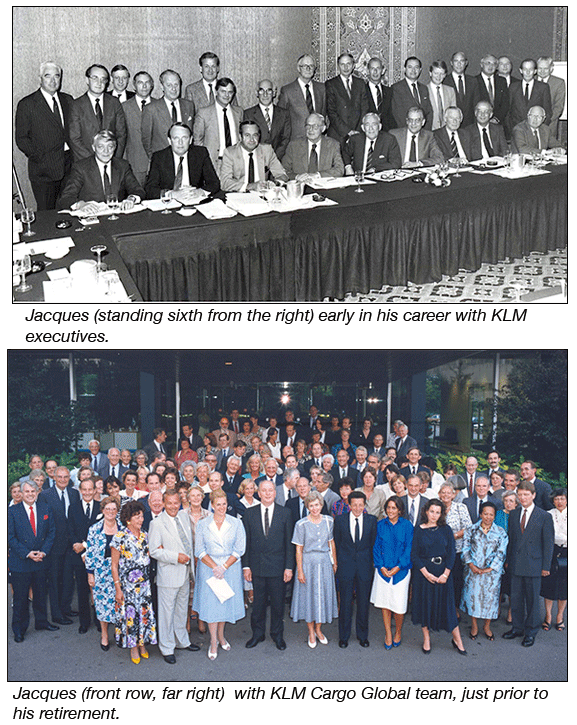 |
Jacques wrapped up his career at KLM Cargo on September 1, 1999, after serving as Executive Vice President of Cargo, and by then he’d already helped transform the airline itself into a global force in logistics.
But he didn’t just manage cargo operations.
Jacques Ancher reimagined what air cargo could be.
Back when most companies were only starting to organize themselves into business units, Jacques leaned into that shift and gave KLM Cargo its own identity, its own strategy, and its own backbone.
Moving cargo out of headquarters and closer to the action at Schiphol, building dedicated teams across Europe, Asia, and the Americas. It sounds straightforward now, but at the time, it was bold. He was building a global structure before globalization became the buzzword.
Jacques, as it turns out, had this ability to see connections others missed.
While many were focused on planes and routes, Jacques was thinking in terms of entire logistics ecosystems—air, ground, customers, partners—all working together.
 |
That vision pushed KLM into areas like advanced cargo facilities, road feeder networks, and even early forms of outsourced lift. Today that feels standard, but back then it was pioneering.
What we appreciated most, though, is how people describe working with him.
Not just as a strategist, but as a leader who sparked energy.
He didn’t just give orders—he invited ideas.
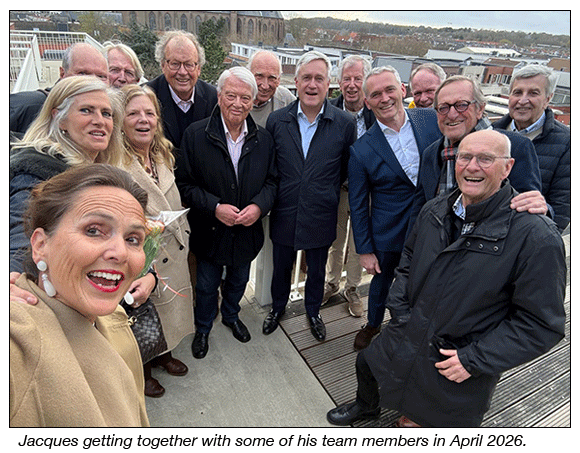
There’s a great example of that. When he reorganized KLM Cargo in the mid-nineties, he didn’t just hand down a plan. He pulled in teams from around the world and made them part of shaping the future. That move created real ownership. And loyalty, too.
 |
A lot of people who worked under him went on to lead major organizations across the industry.
They often say their passion for air cargo started during those years with Jacques.
He also had this reputation for balance.
He understood the tension between airlines, forwarders, and customers. Jacques somehow managed to keep all three in view without losing direction, which is no small feat in such a competitive space.
 But maybe that’s where his philosophy came in—he believed that principles mattered more than shortcuts. But maybe that’s where his philosophy came in—he believed that principles mattered more than shortcuts.
Long-term success over quick wins. He lived that out not just in business, but in how he connected with people.
Take his press sessions, as we recall. These weren’t quick, polished briefings. They turned into real conversations—sometimes lasting hours.
Imagine that today.
A room full of journalists actually debating ideas with an airline executive, not just collecting quotes. He even started putting his watch on the table, because once the discussion got going, time stopped mattering.
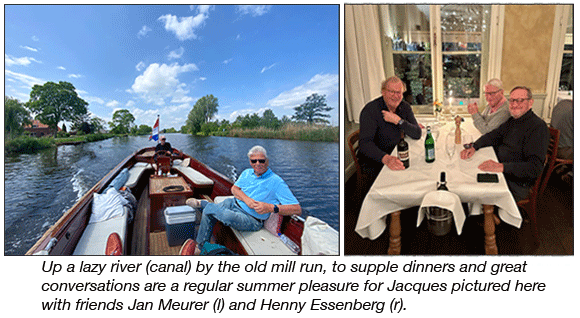
And then, after a full day of talking business, he’d host wonderful elaborate dinners—bringing people together to keep the vibe alive and continuing in a completely different way. It wasn’t just networking. It was community.
That combination—sharp thinking, openness, and a genuine love of life—made him stand out, but to tell the truth actually made us all better.
Recall on this air cargo beat, even competitors respected him deeply. Not just as a rival, but as someone shaping the direction of the entire industry.
What’s interesting is that some of his ideas didn’t fully land at the time. Things like redefining relationships with forwarders were seen as too ambitious, maybe even too disruptive. But fast forward a couple of decades, and those same ideas are now standard practice. It’s that classic story of being ahead of your time.
When he retired, people expected him to pop back up somewhere else. But he didn’t. He chose a quieter life—family, time, simple pleasures.
 There’s something powerful about that. After reshaping an industry, he stepped away and just lived. No spotlight, no comeback tour. There’s something powerful about that. After reshaping an industry, he stepped away and just lived. No spotlight, no comeback tour.
Still, his influence didn’t leave with him. It’s in the systems, the strategies, and especially the people he inspired.
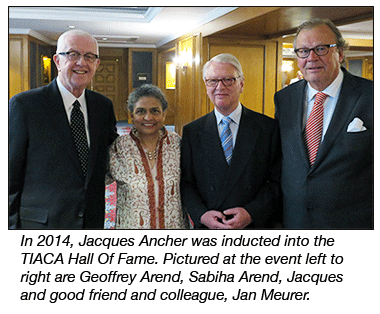
So when people call Jacques Ancher a “Dutch Master” of air cargo, it’s not just a compliment. It’s recognition that he helped paint the blueprint for how the industry works today.
And maybe that’s the real legacy—not just what he built, but how many others are still building because of him.
So Jacques, with best wishes and gratitude for sticking around so we can all celebrate what you did for us again.
Thanks for the memories . . . |






 Vol. 25 No. 19


 100%
Green
100%
Green