 |
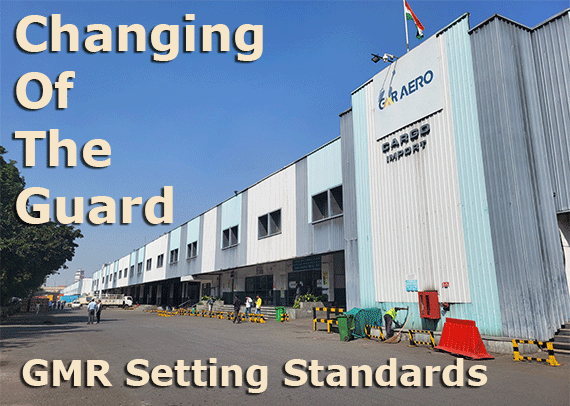
In the high-stakes world of international air cargo, diplomatic tensions rarely spill onto airport aprons. Yet at Indira Gandhi International Airport (IGIA), geopolitics and logistics have become closely intertwined. In a move that signals a new phase for India’s busiest aviation hub, GMR Airports Limited (GAL) has emerged as the winning bidder to modernize and manage Cargo Terminal 1.
The award follows a turbulent year triggered by the abrupt exit of Turkish handler Çelebi Aviation. Under the newly awarded concession, GMR Airports will upgrade, finance, operate and maintain the facility under a revenue-sharing arrangement with Delhi International Airport Limited (DIAL) until 2036. The terminal is expected to generate around ₹340 crore in revenue share for DIAL in the first full year of operations.
On paper, the concession looks like a regular infrastructure deal. In reality, national security issues, political tensions, and the need for ongoing operations make it one of the biggest changes in India’s airport cargo handling in recent years.
Security Shock and the Sudden Exit of Celebi
In May 2025, the Bureau of Civil Aviation Security canceled Celebi’s security clearance. The move happened after Turkey supported Pakistan during a short border clash with India. Authorities acted fast to stop the company from operating nationwide. Within days, the Ministry of Civil Aviation ordered DIAL to end its contract with Celebi. The decision followed direct concerns about national safety and foreign influence in air cargo operations.
The fallout was immediate. Çelebi had been a significant presence in India’s aviation services ecosystem, operating at nine airports and handling roughly 540,000 tonnes of cargo annually.
At Delhi airport, the company managed one of the airport’s cargo terminals and employed thousands of staff. Its removal triggered urgent contingency planning to ensure that cargo operations at the airport — which processes more than a million tonnes of freight annually — did not grind to a halt.
Çelebi fought back in court, saying the revocation had no clear reason, pointing out the facility was owned by investors from the U.S., UK, and Canada. The Delhi High Court dismissed the challenge. Justice Sachin Datta looked at private documents and found that national security needs could override formal legal issues. With nearly 4,000 jobs and key cargo operations at risk, GMR Airports stepped in to run the airport until a final solution was agreed upon. The interim management became a permanent role after DIAL opened a public competition to choose a long-term operator for Cargo Terminal 1. By March 2026, GMR Airports won the bid. The deal runs until 2036 and requires GMR to upgrade the terminal, improve physical systems, manage daily operations, and deliver consistent service to airlines and freight companies. Even though DIAL is run by GMR Group, the airport team stressed that the process followed fair procedures and followed all required rules. Each step was open to inspection and independent of any group influence. Decisions were made based on clear criteria and documented evaluations. The final selection was supported by full transparency in all stages of review.
For GMR, this is more than just a new agreement; it’s a plan that strengthens its control over cargo operations at Delhi airport. The company now manages both cargo terminal operations and overall airport functions under one structure. GMR Airports already runs DIAL, which handles airport infrastructure and passenger services. Adding Cargo Terminal 1 brings full integration to airport operations. Industry experts believe this change brings several advantages. It could speed up funding for new projects. Large cargo facilities often face slow progress due to separate management between airport operators and terminal owners. With shared leadership, choices about warehouse growth, automation, and apron access can move faster. Integrated planning helps improve how cargo moves through the airport. Getting planes parked right means timing trucks, moving goods smoothly, one team lining up every step. When just one group runs it, pieces fit tighter into the big picture. Flights might land and leave on time more often. Right now, freight teams talk to loaders. Guards, inspectors, people in separate offices. GMR running both buildings and loading jobs helps things connect easier. Overseas flights may find less waiting, faster exits after landing.
Modernization and a Push for Technology
The concession needs big improvements to terminal areas over the next ten years. Automation will play a major role in those updates. Automatic sorting and AI-driven logistics can speed up processing, especially for electronics and medicines. Cold chain storage could grow as well, supporting Delhi's rise as a key pharma export hub. Digital records with no paper forms will make customs more efficient and reduce wait times. These changes are happening now because freight volume is rising fast. The airport handles many types of cargo, pharmaceuticals, electronics, cars, fashion, and online sales from northern India.
Competition in the market is still a concern. Many international airports use several separate terminal companies. That helps bring in new ideas, keeps prices fair, and encourages progress.
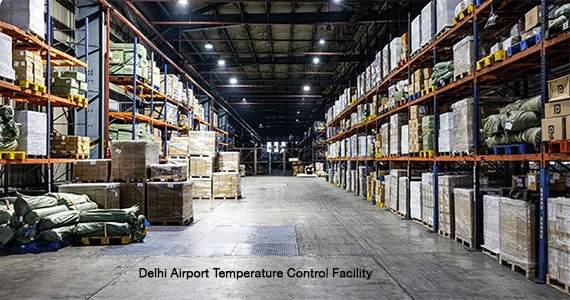 |
GMR Airports took over managing Cargo Terminal 1 after winning a long-term contract through an open and independent process. Some individuals still wonder how much authority the company actually holds in daily operations.. DIAL states the selection followed fair and clear steps no secret decisions or favoritism. Airlines and federal groups will monitor prices and service quality to ensure markets remain competitive.
After a year of uncertainty, things stabilized following Celebi’s abrupt exit. That event disrupted operations at multiple Indian airports especially in Delhi where thousands of employees needed new duties and updated credentials. Workers faced sudden changes while new entities formed to take over responsibilities. DIAL formally handed management to GMR Airports, closing out the interim period. Now, teams are able to work on lasting goals like expanding cargo capacity and improving infrastructure.
India wants to grow its position in international supply chains, so strong air cargo centers will become more important. Delhi airport already serves as a major route for regional goods, especially pharmaceuticals and manufactured products.
Whether GMR Airports’ deeper involvement leads to faster infrastructure upgrades and improved logistics integration will determine how effectively IGIA can handle the next wave of cargo growth — and whether Delhi can truly emerge as one of Asia’s leading air freight gateways.
Tirthankar Ghosh |







 100%
Green
100%
Green